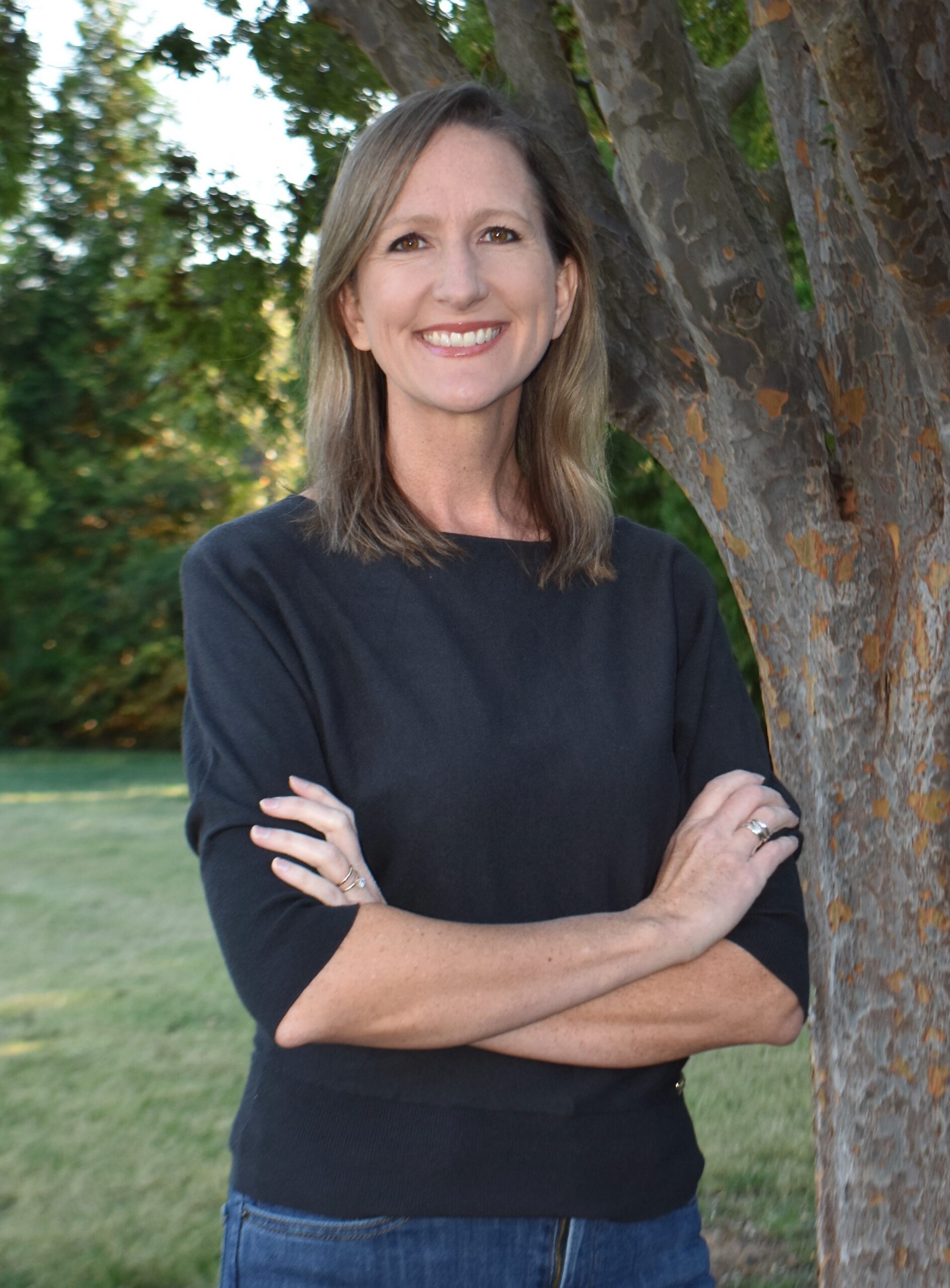
As Bethesda Workshops’ Marketing Director, Erica helps share the hope and healing available at Bethesda. Her work includes creating our messages shared through email, social media, and on our website.
She brings experience in marketing several small businesses and non-profit organizations in the Southeast. Erica earned her BS in Business Administration in Marketing from Appalachian State University and completed a certificate program in Digital Marketing with the University of North Carolina at Chapel Hill.
She and her husband have three kids. She enjoys traveling with her family to the Carolina beaches and mountains.
Shelly Gibbs
Shelly Gibbs is a nonprofit consultant and business coach who partners with organizations and individuals navigating their next season of growth. Her work centers on three pillars: strategy, systems, and staff — the building blocks of sustainable, thriving organizations.
Before launching her practice, Shelly served as Executive Director of NorthState Care Clinic and Director of Moral Revolution, two nonprofits dedicated to equipping and empowering people to live as their best, truest selves.
Shelly brings a whole-person perspective to her work, grounded in the belief that we are tri-polar beings — body, soul, and spirit — and that lasting transformation requires all three. She partners with people in their pursuit of freedom, peace, and abundance, holding firmly to this: we are better together.
She holds a BA in Liberal Studies and a Multi-Subject Teaching Credential from Simpson University. A Northern California native, she's now rooted in the Pacific Northwest.
Melissa Haas
Melissa Haas serves as the spouse-supporting therapist at HopeQuest. Melissa has a master’s degree in marriage and family therapy and is a licensed professional counselor. Passionate about spiritual community, healthy marriages, and intimacy with God, Melissa regularly facilitates small groups and teaches and speaks on these topics in order to help the Body of Christ grow relationally with God and each other.
Melissa and her husband Troy have been married for thirty-four years and have three adult children and one grand-daughter. They have devoted their lives to helping others find hope and freedom from addiction, giving back the comfort they have received on their own journeys of healing.
Daniel Kiser
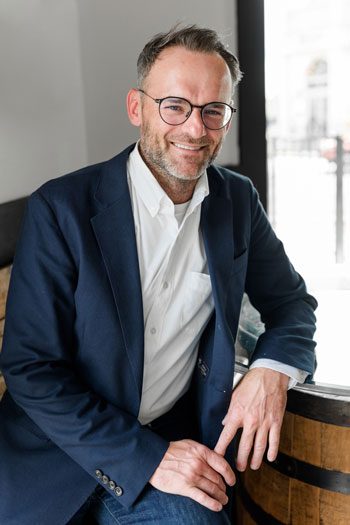
Daniel is a Licensed Marital and Family Therapist in the state of Tennessee. He has earned master degrees in Marital and Family Therapy and Biblical Studies from Lee University. Throughout his clinical experience, he has demonstrated clinical effectiveness working with adolescents and families through utilization of evidenced based approaches in his roles as a counselor, clinical supervisor, and behavioral health manager. He has worked with adolescents with severe suicidal behaviors, anxiety, depression, aggression, and high-risk behaviors in residential treatment. Addressed the relational distress within the parent-child relationship created by their child’s disruptive behavioral responses, helping parents through their despair, resentment, and disillusionment. He is invested in the integration of theology and psychology, believing that activation of human longings, desires, and vitality for life is based upon both disciplines. Aside from professional development, he also has experienced the profound impact of a transformative therapeutic relationship that provides accountability, exploration of underlying wounds and thoughts, and compassionate care. Counseling is oriented towards reclaiming, rediscovering, and restoring vital aspects of human development and he is eager to help others in their process as well.
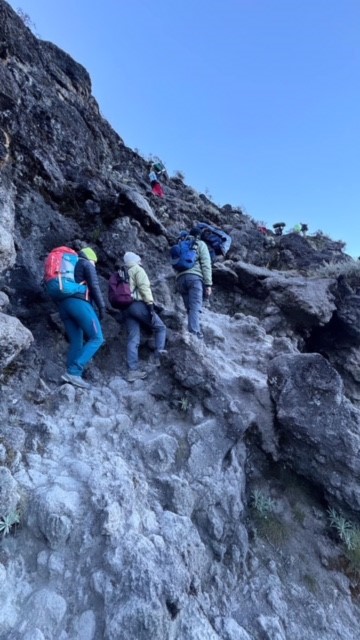
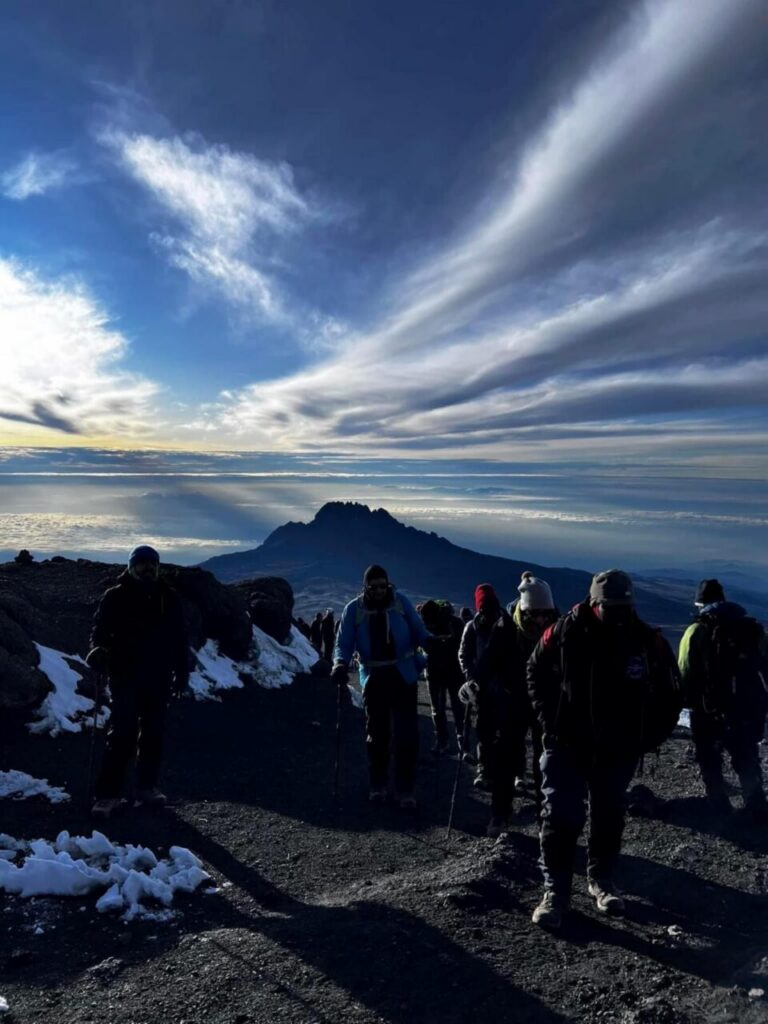
Climbing Mount Kilimanjaro next month may be the hardest thing I’ve ever done physically (well, except for natural childbirth – twice). Although it’s not a technical climb, meaning it doesn’t require special gear or skills, the trek reportedly has stretches that are definitely taxing. The push to the summit of Uhuru Peak is challenging, I understand, and the long descent through 8,000 feet of loose rock is even more so. I’m following a rigorous training regimen and trust I’ll be as prepared as possible.
By far, though, most hikers who have climbed Kili insist that the hardest part is the mental challenge, not the physical. The effect of the 19,341-feet altitude at the summit is the unpredictable factor, and even if a climber is spared altitude sickness, physical exertion in the thin air makes breathing very difficult. All the recommendations online, and echoed by my informal trainer who summited the mountain a few years ago, emphasize the importance of being mentally prepared.
Although I may or may not have a reputation for stubbornness (I prefer the term “tough minded”), I wasn’t sure how to train for mental toughness. I do have a fair amount of experience with emotional resilience, and I figured that many of the strategies that foster such hardiness would likely also build a robust mental muscle. Examples include staying firmly in the moment – focusing on the holy NOW – keeping a positive attitude, and celebrating successes.
Knowing how to do these helpful things, however, is often quite the challenge. It’s easy to lose concentration – meaning, for me, almost always tumbling down a rabbit hole into a dark, negative place. Determined to do something different on Kilimanjaro, I’ve found a surprising way to increase mental stamina by walking (literally) into a new technique while training: the use of various mantras, especially when my body is tiring. A mantra is a word or phrase, often with a rhythm, that’s repeated in a steady cadence – a rise and fall that, ideally, matches the breath.
The key Swahili phrase on a Kilimanjaro climb is the admonishment, Polé, polé!, which means go slowly because of the altitude. Using that as a takeoff, I’ve hiked or done dozens of reps on tough stone steps with a variety of motivating or grounding mantras like these below. (They may not make a cadence in just reading them, but they settle into a nice 1-2-3-4 beat with the right emphasis and speed in certain places.)
Slowly, slowly / gets it done.
I can do / hard things.
Step by step / takes you to the top.
Kili strong / I’m Kili strong!
Each step brings me / closer to the goal.
I can see myself / on the summit / single steps / will take me there.
It’s also strong / to take a break (said while walking slowly only a mile or two through my neighborhood when my body tanked from over-training and I needed to ease up for a while
This spring when I encountered some unexpected non-Kilimanjaro-related challenges associated with an intractable situation with realistic potential for a dire outcome, it occurred to me that training-style mantras could easily be adapted to life in general. Instead of stewing on the situation while I hiked (or did anything else), for weeks I breathed through these mantras of promise or encouragement:
I trust you God / help me trust you more.
With God’s help / I will let this go.
Begging grace of acceptance / over all that troubles.
With God’s help / I will detach.
I have what it takes / to weather this storm.
I discovered that even when not specifically training, I need only to get quiet for a minute, breathe, and repeat one or more mantras for sixty seconds, and I feel calmer and more centered. No physical exertion or tall mountain required.
I anticipate that a combination of these mantras for Kilimanjaro training and for life will get me to the “Roof of Africa” and safely back down. And even if the altitude or injury or illness keeps me from summitting, I’ll consider myself successful in my quest.
Preparing to climb Mount Kilimanjaro has brought me to the healthiest place in my life. Physically, mentally, emotionally, relationally, and spiritually, I am strong, ready for the challenge, and unspeakably grateful for this opportunity.
I won’t send a blog in August while I’m away, but I’ll provide a report (and pictures) in September. I covet your prayers and good wishes for safe travels and a great trek (and for the well-being of my faithful canine companion Kevin while I’m away for so long).